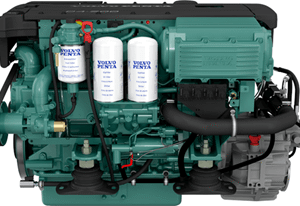
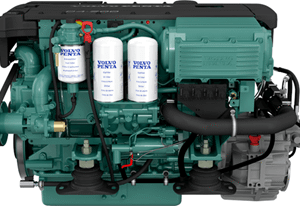
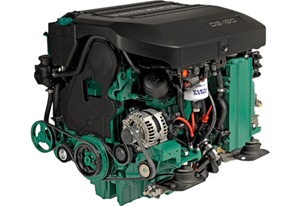
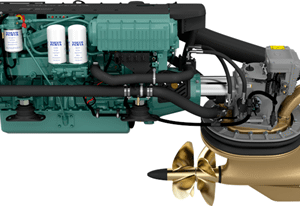
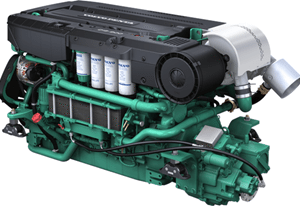
Volvo Penta D1-30 Inboard Diesel Engine
The Volvo Penta D1-30 Inboard Diesel Engine is a compact three-cylinder marine propulsion engine designed for sailboats and other compatible displacement vessels. With 1.1 litres of displacement and an output of 20.9 kW (28.4 HP) at 3,200 rpm, it provides practical auxiliary propulsion from a naturally aspirated diesel platform.
Its straightforward engine architecture, freshwater cooling and mechanical fuel system make the D1-30 particularly relevant for boat owners, boatbuilders and marine professionals requiring a compact Volvo Penta inboard engine for a new installation or repower project.
Overview
The Volvo Penta D1-30 belongs to the manufacturer’s compact D1 marine diesel engine family.
It uses a three-cylinder, naturally aspirated diesel configuration with approximately 1.1 litres of displacement.
Unlike turbocharged marine engines designed to produce considerably higher power from a given displacement, the D1-30 uses naturally aspirated induction. This creates a straightforward propulsion package appropriate for applications where compact size and practical auxiliary power are priorities.
The engine develops 20.9 kW (28.4 HP) at its rated speed of 3,200 rpm.
Although commonly identified commercially by its D1-30 model designation, buyers comparing engines should use the published power specification when calculating vessel propulsion requirements.
Applications and Compatibility
The Volvo Penta D1-30 marine diesel engine is particularly suited to compatible sailboats and displacement craft requiring compact inboard propulsion.
For sailing vessels, an auxiliary diesel engine is required for situations such as harbour manoeuvring, operation when wind conditions are unsuitable and other circumstances where dependable engine propulsion is necessary.
The D1-30 can also be considered for repower projects.
Volvo Penta specifically includes the D1-30 among the engines supported by its D1/D2 repowering program, with replacement possibilities covering a range of older Volvo Penta and other marine engine installations.
This makes the D1-30 especially relevant to owners replacing an older small marine diesel.
However, repower compatibility should not be determined from horsepower alone.
The existing engine bed, transmission, reduction ratio, shaft arrangement or saildrive, propeller, cooling, exhaust and available installation space should all be assessed before selecting the replacement engine.
Naturally Aspirated Three-Cylinder Design
At the centre of the D1-30 is a 1.1-litre three-cylinder diesel engine.
The engine is naturally aspirated, meaning intake air enters without the assistance of a turbocharger.
For this type of marine application, a naturally aspirated design provides a relatively straightforward engine architecture without the additional turbocharging equipment used on higher-output propulsion engines.
Its three-cylinder configuration also allows the engine to remain compact enough for installations where machinery-space dimensions can be restrictive.
This is particularly important aboard sailing vessels, where engine compartments are frequently smaller than those found on larger motor yachts and powerboats.
Fuel and Control System
The D1-30 uses a mechanical diesel fuel system with an inline injection pump.
This distinguishes it from larger electronically controlled common-rail marine engines.
Mechanical engine controls can be particularly relevant to buyers replacing older marine diesel equipment because the operating architecture is different from electronically integrated propulsion systems.
For a repower, however, the entire installation still needs to be considered.
Fuel supply and return arrangements, controls, instrumentation, starting system and charging requirements should all be checked against the existing vessel installation.
Freshwater Cooling
The Volvo Penta D1-30 uses freshwater cooling as part of its marine engine design.
A freshwater-cooled marine diesel maintains an internal coolant circuit while transferring engine heat through the marine cooling system.
This arrangement is particularly important in marine applications because it separates the engine’s internal cooling passages from direct continuous exposure to raw seawater.
The complete cooling installation should nevertheless be correctly configured and maintained.
Seawater intake, hoses, pump components, heat exchanger, exhaust arrangement and related equipment should be inspected when installing the engine or carrying out a repower.
Designed for Sailing Applications
The D1 range forms part of Volvo Penta’s propulsion solutions for sailing vessels.
For sailboat owners, engine selection involves more than finding an engine with approximately the same horsepower as the unit being replaced.
The engine must provide appropriate propulsion for the vessel while remaining compatible with the available machinery space and driveline.
Charging capacity is another consideration aboard modern sailing vessels because navigation equipment, communications, lighting and other onboard electrical systems can create substantial electrical demand.
Volvo Penta highlights high-capacity charging as a feature of its current D-series sailing solutions.
The propulsion arrangement must also be considered. Depending on the vessel, a D1-series engine can form part of an installation using a conventional inboard shaft arrangement or a compatible saildrive configuration.
Repowering with the D1-30
One of the strongest applications for the Volvo Penta D1-30 is replacing an older small marine diesel engine.
Volvo Penta offers dedicated D1/D2 repowering solutions intended to simplify installation when replacing a range of earlier engine models.
For some installations, these solutions can help match a newer D1 engine to an existing engine bed and reduce the extent of structural modification required.
However, compatibility varies according to the engine and propulsion system being replaced.
In shaft-drive installations, the existing reverse gear may need to be replaced for certain supported repower combinations.
For saildrive installations, drive compatibility also needs to be assessed carefully.
The correct approach is therefore to identify the existing engine model, transmission or saildrive, engine-bed arrangement and propeller configuration before determining the components required for the conversion.
Who Is This Engine Suitable For?
The Volvo Penta D1-30 is particularly relevant to owners of sailboats and compatible displacement vessels requiring compact auxiliary diesel propulsion.
It can suit buyers replacing an ageing marine diesel, boatbuilders planning a new propulsion installation and marine workshops carrying out repower projects.
Its 1.1L three-cylinder configuration, naturally aspirated design and mechanical fuel system also make it particularly interesting for buyers looking for a relatively straightforward inboard diesel architecture.
For a repower, the final choice should be based on the complete vessel rather than simply matching the model name or approximate horsepower.
Vessel displacement, hull characteristics, existing driveline, propeller, installation dimensions and intended operating conditions should all be considered.
Technical Specifications
The main specifications of the Volvo Penta D1-30 Inboard Diesel Engine are summarized below for quick reference.
| Specification | Details |
|---|---|
| Manufacturer | Volvo Penta |
| Model | D1-30 |
| Product Type | Marine inboard diesel engine |
| Rated Power | 20.9 kW (28.4 HP) |
| Rated Engine Speed | 3,200 rpm |
| Number of Cylinders | 3 |
| Displacement | 1.1 L |
| Aspiration | Naturally aspirated |
| Fuel System | Inline injection pump |
| Control System | Mechanical diesel interface |
| Cooling System | Freshwater cooling |
| Primary Application | Sailboat and displacement-vessel propulsion |
| Installation Options | Compatible shaft-drive / saildrive configurations |
| Model Family | Volvo Penta D1 |
The exact engine version, transmission or saildrive configuration and installation requirements should be confirmed before purchase.
Ordering and Support
Before ordering the Volvo Penta D1-30 Inboard Diesel Engine, buyers should confirm the required propulsion configuration and compatibility with their vessel.
For repower projects, useful information includes the existing engine model, transmission or saildrive, reduction ratio, propeller, engine-bed arrangement and available installation dimensions.
These details are especially important when replacing an older Volvo Penta or another manufacturer’s engine.
Customers should also confirm exactly what is included with the engine being offered, including the transmission, controls, instrumentation and installation equipment where applicable.
Buyers comparing other power outputs can explore our Volvo Penta engines, related marine diesel engines and other inboard propulsion solutions.
For current availability and exact configuration information, contact JB Marine GmbH with your vessel and propulsion requirements.
Frequently Asked Questions
How much power does the Volvo Penta D1-30 produce?
The Volvo Penta D1-30 produces 20.9 kW (28.4 HP) at 3,200 rpm. D1-30 is the engine’s model designation, while the published power figure should be used when comparing propulsion requirements with other marine diesel engines.
What is the displacement of the Volvo Penta D1-30?
The D1-30 has approximately 1.1 litres of displacement and uses three cylinders. This compact configuration makes the engine particularly relevant to sailboats and other vessels where available engine-room space is limited.
Is the Volvo Penta D1-30 turbocharged?
No. The D1-30 is a naturally aspirated marine diesel engine. It does not rely on a turbocharger to increase intake-air pressure, distinguishing it from Volvo Penta’s larger turbocharged propulsion engines.
What type of fuel injection does the D1-30 use?
The engine uses a mechanical fuel system with an inline injection pump rather than an electronically controlled common-rail system. This provides a relatively straightforward diesel engine architecture for compact marine propulsion.
Is the Volvo Penta D1-30 suitable for a sailboat?
Yes. The D1 family is designed for sailing applications, and Volvo Penta offers both inboard-shaft and saildrive solutions within the range. The correct propulsion configuration should be selected according to the individual vessel.
Can the Volvo Penta D1-30 replace an older engine?
The D1-30 can be used in compatible repower projects, and Volvo Penta provides dedicated D1/D2 repowering solutions for several older engine installations. Compatibility depends on the existing engine bed, transmission or saildrive, propeller and other installation requirements.
What should I check before ordering a D1-30?
Confirm the vessel’s required engine output, existing transmission or saildrive, reduction ratio, propeller specification, engine-bed arrangement and available installation space. For a repower, providing the current engine model will also help determine the appropriate configuration.