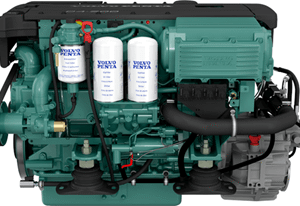
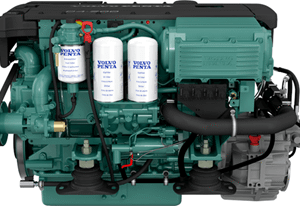
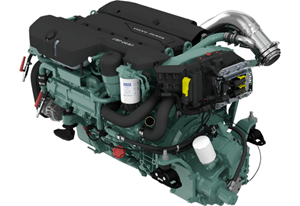
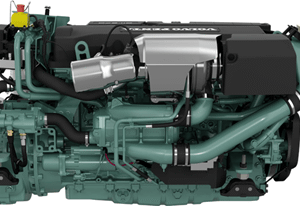
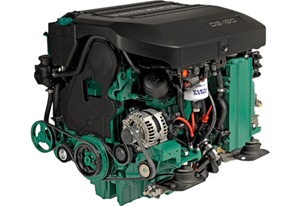
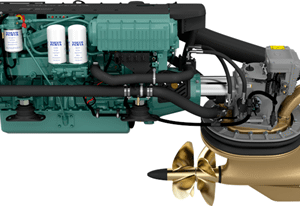
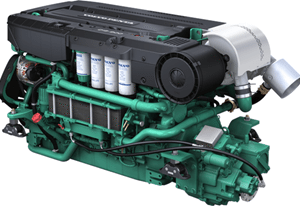
Volvo Penta D4 320 Marine Diesel Engine
The Volvo Penta D4 320 Marine Diesel Engine is a compact four-cylinder marine propulsion engine delivering 235 kW (320 HP) of crankshaft power at 3,600 rpm. With 3.67 litres of displacement, turbocharged and aftercooled aspiration, and a choice of compatible marine transmissions, the D4-320 combines substantial output with a relatively compact engine platform.
Designed for demanding marine propulsion applications, the D4-320 is particularly relevant to boat owners, builders, marine professionals and repower specialists who require strong performance without moving to a significantly larger engine.
Overview
The Volvo Penta D4-320 is an inline four-cylinder marine diesel engine with a displacement of 3.67 litres (223.7 in³).
Despite its relatively compact displacement, the engine develops 320 HP (235 kW) at the crankshaft at 3,600 rpm. Propeller shaft output is specified at 307 HP (226 kW), giving buyers a useful distinction between the engine’s rated crankshaft output and the power delivered through the propulsion system.
The engine uses a turbocharged and aftercooled configuration designed to support its high power output from a four-cylinder platform.
Its compact architecture makes the D4-320 particularly interesting where available engine-room space and installation weight must be balanced against the vessel’s required propulsion power.
The engine is specified with an R5 rating and can be configured for either a 12V or 24V electrical system, providing additional flexibility when matching the engine to a vessel’s electrical installation.
Applications and Compatibility
The Volvo Penta D4-320 is designed for marine propulsion installations where its power output, duty rating and driveline configuration correspond with the requirements of the vessel.
It can be considered for suitable powerboats, motor yachts, recreational craft and repower projects requiring a compact high-output diesel engine.
One of the important considerations when selecting the D4-320 is the transmission configuration.
The engine can be paired with different transmission arrangements, including the HS68IV, HS68A and HS85A, depending on the intended installation.
Available reduction ratios include 1.992–2.477 with the HS68IV, 2.037 with the HS68A, and 2.500 with the HS85A.
Transmission selection affects considerably more than the physical connection to the engine. The reduction ratio must be considered alongside propeller size, shaft arrangement, vessel displacement and intended operating characteristics.
For repower projects, the existing engine’s 320 HP rating alone should therefore not be used to determine compatibility.
Engine-room space, mounts, shaft alignment, transmission ratio, propeller requirements, exhaust system, cooling capacity, controls and electrical configuration should all be evaluated before confirming an installation.
Customers comparing different outputs can also explore our Volvo Penta marine engines range and related marine diesel engines for other suitable propulsion options.
Engine Design and Performance
The D4-320 uses an inline four-cylinder diesel configuration with 3.67 litres of displacement.
A notable characteristic is its power-to-displacement relationship. The engine produces 235 kW (320 HP) from a 3.67-litre platform, making it an attractive option where substantial propulsion power is required but installation space remains an important consideration.
The engine operates at a rated speed of 3,600 rpm.
Turbocharging increases the quantity of air available to the engine, while the aftercooling system reduces the temperature of the compressed intake air. Together, these systems support the airflow requirements of the engine across its operating range.
Volvo Penta’s D4 platform also incorporates electronically controlled common-rail direct fuel injection, allowing precise management of fuel delivery.
For the complete propulsion installation, crankshaft power should be distinguished from propeller shaft power. While the D4-320 develops 320 HP at the crankshaft, specified propeller shaft output is 307 HP.
This distinction provides buyers with a more useful understanding of the power available through the driveline.
Key Benefits
One of the most important characteristics of the Volvo Penta D4 320 is its combination of 320 HP output and 3.67-litre displacement.
This makes it particularly relevant to installations where substantial propulsion power is needed from a relatively compact four-cylinder diesel engine.
Transmission flexibility is another useful consideration. Multiple compatible gearbox arrangements allow the propulsion package to be configured around different vessel and driveline requirements.
The choice between 12V and 24V electrical configurations also provides greater flexibility when integrating the engine into existing vessel systems.
Depending on the transmission selected, the complete engine package has different dry weights. With an HS68A transmission, the specified dry weight is approximately 580 kg (1,279 lb). With the HS68IV, it increases to approximately 610 kg (1,345 lb), while an HS85A-equipped configuration weighs approximately 605 kg (1,334 lb).
These differences matter during both new installations and repowers because gearbox selection can influence total package weight, driveline layout and vessel balance.
Emissions and Marine Compliance
The D4-320 is specified for compliance with IMO NOx requirements, EU RCD Stage II and US EPA Tier 3.
These classifications are particularly important when engine selection must account for the emissions requirements applicable to the vessel and its operating region.
The engine also uses an SAE10 flywheel and SAE4 flywheel housing arrangement.
As with other installation-specific specifications, buyers should ensure that the required engine configuration and applicable certification are confirmed for their vessel and intended operating region before purchase.
Who Is This Engine Suitable For?
The Volvo Penta D4-320 is particularly suitable for buyers requiring a compact 320 HP marine diesel engine for a compatible propulsion installation.
Potential buyers include private boat owners, boatbuilders, marine engineers, workshops and repower specialists working with vessels requiring this power class.
Its combination of a four-cylinder layout, 3.67-litre displacement and multiple transmission configurations can make it particularly relevant where engine-room space is restricted but substantial propulsion output is still required.
The D4-320 can also be considered when replacing an older marine diesel engine. However, a repower should be based on complete installation compatibility rather than horsepower alone.
Existing transmission arrangement, propeller specification, engine mounts, shaft alignment, cooling, exhaust, electrical voltage and control systems should all be reviewed before selecting the engine.
Technical Specifications
For buyers who want to evaluate the Volvo Penta D4 320 Marine Diesel Engine quickly, the principal technical details are summarized below.
| Specification | Details |
|---|---|
| Manufacturer | Volvo Penta |
| Product Designation | D4-320 |
| Product Type | Marine diesel engine |
| Crankshaft Power | 235 kW (320 HP) |
| Propeller Shaft Power | 226 kW (307 HP) |
| Rated Engine Speed | 3,600 rpm |
| Displacement | 3.67 L (223.7 in³) |
| Engine Configuration | Inline 4-cylinder |
| Aspiration | Turbocharged / Aftercooled |
| Rating | R5 |
| Electrical System | 12V or 24V |
| HS68IV Dry Weight | 610 kg (1,345 lb) |
| HS68A Dry Weight | 580 kg (1,279 lb) |
| HS85A Dry Weight | 605 kg (1,334 lb) |
| HS68IV Ratio | 1.992–2.477 |
| HS68A Ratio | 2.037 |
| HS85A Ratio | 2.500 |
| Emission Compliance | IMO NOx, EU RCD Stage II, US EPA Tier 3 |
| Flywheel | SAE10 |
| Flywheel Housing | SAE4 |
Transmission configuration, reduction ratio, electrical system and other installation requirements should be confirmed for the intended vessel before purchase.
Ordering and Support
Before ordering the Volvo Penta D4 320 Marine Diesel Engine, buyers should establish which engine and transmission configuration is appropriate for their vessel.
The choice between the HS68IV, HS68A and HS85A transmissions affects reduction ratio, package weight and the overall driveline arrangement. Selecting the correct configuration should therefore be based on the vessel’s propulsion requirements rather than engine horsepower alone.
For a repower project, information about the existing engine, gearbox, reduction ratio, shaft and propeller can help determine what changes may be required for the new installation.
The vessel’s 12V or 24V electrical system should also be confirmed when determining the required engine configuration.
Customers considering alternative power ratings can browse our Volvo Penta engines collection and related marine diesel engines to compare other available propulsion options.
For current availability and configuration information, contact JB Marine GmbH with the vessel, existing engine and required propulsion details.
Frequently Asked Questions
How much power does the Volvo Penta D4-320 produce?
The Volvo Penta D4-320 develops 235 kW (320 HP) of crankshaft power at 3,600 rpm. Propeller shaft power is specified at 226 kW (307 HP), providing buyers with both engine output and driveline output figures when assessing the propulsion package.
What is the displacement of the Volvo Penta D4-320?
The D4-320 has a displacement of 3.67 litres (223.7 in³) and uses an inline four-cylinder configuration. Its relatively compact displacement combined with 320 HP output makes it particularly relevant to marine installations where both propulsion power and available engine-room space are important.
Is the Volvo Penta D4-320 turbocharged?
Yes. The D4-320 uses a turbocharged and aftercooled configuration. Turbocharging increases the available intake air, while aftercooling reduces the temperature of the compressed air before it reaches the engine.
Is the Volvo Penta D4-320 available in 12V or 24V?
The engine can be configured for 12V or 24V electrical systems. The appropriate voltage should be selected according to the vessel’s existing electrical installation and the specification of the engine package being purchased.
Which transmissions are available for the D4-320?
Specified transmission options include the HS68IV, HS68A and HS85A. Available ratios vary by transmission, including 1.992–2.477 for the HS68IV, 2.037 for the HS68A and 2.500 for the HS85A. The appropriate gearbox and ratio depend on the vessel’s driveline requirements.
How much does the Volvo Penta D4-320 weigh?
Weight depends on transmission configuration. The specified dry weight is approximately 580 kg with the HS68A, 605 kg with the HS85A, and 610 kg with the HS68IV. The complete configuration should therefore be considered when evaluating installation weight.
Can the Volvo Penta D4-320 be used for a repower?
The D4-320 can be considered for a compatible marine repower, but horsepower alone should not determine suitability. Transmission ratio, propeller requirements, shaft arrangement, engine mounts, available space, electrical voltage, cooling, exhaust and controls should all be assessed before installation.