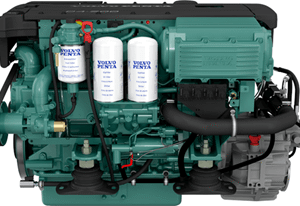
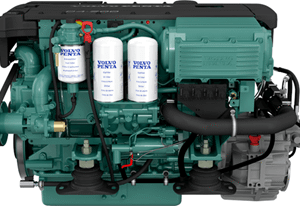
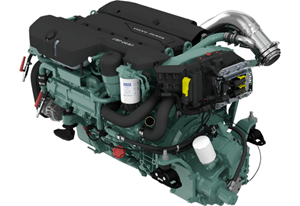
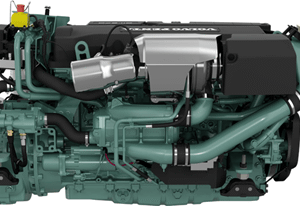
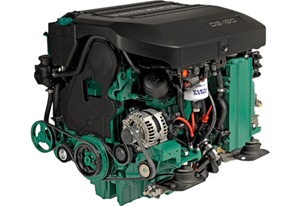
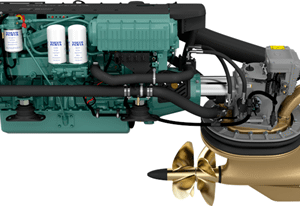
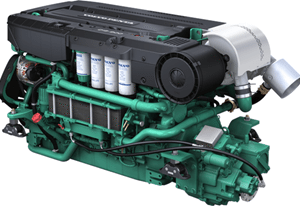
Volvo Penta D6-330 Aquamatic Sterndrive Marine Diesel Engine
The Volvo Penta D6-330 Aquamatic Sterndrive Marine Diesel Engine is a six-cylinder, 5.5-litre marine propulsion package delivering 330 HP (243 kW). Combining a turbocharged and charge-air-cooled diesel engine with Volvo Penta’s Aquamatic Sterndrive system, it is designed for vessels requiring strong propulsion performance with integrated electronic control.
The D6-330 incorporates common-rail fuel injection, Electronic Vessel Control (EVC), heat exchanger cooling and hydraulic gear shifting, providing a complete propulsion platform for compatible powerboats and recreational marine applications.
Overview
The Volvo Penta D6-330 combines a 5.5L six-cylinder marine diesel engine with Aquamatic Sterndrive propulsion.
Rated at 330 HP (243 kW) with a maximum engine speed of 3,500 rpm, the D6-330 provides substantial output from a six-cylinder diesel platform while integrating the engine, drive and electronic controls as part of the propulsion system.
Unlike an engine-only installation intended for a conventional shaft arrangement, this configuration uses Volvo Penta’s Aquamatic Sterndrive concept. This distinction is important for buyers because the propulsion type influences installation, steering, controls and overall vessel compatibility.
The engine itself incorporates turbocharging with charge-air cooling and electronically controlled common-rail fuel injection.
For buyers evaluating a complete propulsion solution rather than simply comparing engine horsepower, these integrated systems are important considerations.
Aquamatic Sterndrive Propulsion
A defining feature of this D6-330 configuration is the Aquamatic Sterndrive system.
A sterndrive installation transfers engine power through a drive mounted at the vessel’s transom rather than through a conventional inboard shaft arrangement.
For buyers, this means the D6-330 Aquamatic should be evaluated as an integrated propulsion package. The vessel must be designed or appropriately configured for the required sterndrive installation.
The system also incorporates hydraulic gear shifting, helping provide controlled engagement of the propulsion system.
A low-speed mode is included as standard in the supplied specification. This is particularly useful when greater control is required during low-speed operation, such as manoeuvring within marinas or other confined areas.
For repower projects, the existing vessel configuration is especially important. Replacing another sterndrive package can still require careful assessment of transom arrangement, controls, steering, electrical systems and other installation requirements.
Engine Design and Performance
The D6-330 uses a six-cylinder diesel engine with 5.5 litres of displacement, providing the foundation for its 330 HP output.
The engine is turbocharged with a charge-air cooler. Turbocharging increases the quantity of air supplied to the engine, while charge-air cooling reduces the temperature of compressed intake air before combustion.
Fuel is delivered through a common-rail fuel injection system.
Common-rail technology enables electronically controlled high-pressure fuel delivery and forms an important part of the D6-330’s engine-management architecture.
The engine is rated at 330 HP (243 kW) with a specified maximum engine speed of 3,500 rpm.
For buyers comparing marine engines, the combination of six cylinders, 5.5L displacement and turbocharged common-rail diesel technology provides a useful picture of where the D6-330 sits within a marine propulsion installation.
Electronic Vessel Control
The D6-330 incorporates Volvo Penta Electronic Vessel Control (EVC).
EVC provides the electronic interface between compatible engine, drive, controls and instrumentation components, helping the propulsion system operate as an integrated package.
This becomes particularly important when planning a new installation or repower because replacing a propulsion system involves more than fitting an engine into the available engine compartment.
Controls, instrumentation, wiring, steering and drive compatibility may all form part of the installation assessment.
For vessels previously fitted with older mechanically controlled propulsion equipment, the electronic requirements of the D6-330 should therefore be considered during the early stages of a repower project.
Cooling and Fuel Consumption
The D6-330 uses heat exchanger cooling, separating the engine’s internal coolant circuit from the raw-water side of the marine cooling system.
Correct cooling-system installation is essential for a marine diesel engine operating under sustained load, particularly within an enclosed engine compartment.
The supplied technical data specifies fuel consumption at 235 g/kWh.
This figure represents specific fuel consumption and should not be interpreted as a fixed litres-per-hour consumption figure for every vessel.
Actual fuel usage can change considerably according to engine load, rpm, vessel weight, hull design, sea conditions, drive setup and operating style.
For buyers comparing propulsion options, the specific consumption figure is therefore most useful as a technical reference rather than a guarantee of actual vessel fuel consumption.
Emissions Compliance
The D6-330 specification includes IMO NOx Tier II, EU RCD Stage II and US EPA Tier 3 emissions compliance.
These standards are relevant when determining whether an engine configuration meets the regulatory requirements applicable to a particular vessel and operating region.
Because certification can be linked to the exact engine version and market, buyers should confirm the applicable emissions documentation for the specific engine being purchased.
Who Is This Engine Suitable For?
The Volvo Penta D6-330 Aquamatic is particularly relevant to buyers requiring a 330 HP six-cylinder diesel sterndrive propulsion system for a compatible vessel.
This can include owners of suitable powerboats and recreational vessels, as well as boatbuilders, marine workshops and repower specialists looking for an integrated Volvo Penta engine-and-drive solution.
The D6-330 may also be considered for vessels already using sterndrive propulsion where a replacement or repower is planned.
However, compatibility should not be determined from horsepower alone.
The vessel’s transom arrangement, existing drive installation, available engine-room space, steering, controls, cooling, exhaust and electrical systems should all be evaluated before purchase.
For buyers whose vessels require conventional inboard shaft propulsion rather than sterndrive propulsion, another D6 configuration may be more appropriate.
Technical Specifications
The main specifications of the Volvo Penta D6-330 Aquamatic Sterndrive Marine Diesel Engine are summarized below for quick comparison.
| Specification | Details |
|---|---|
| Manufacturer | Volvo Penta |
| Model | D6-330 |
| Product Type | Marine diesel propulsion package |
| Rated Power | 243 kW (330 HP) |
| Maximum Engine Speed | 3,500 rpm |
| Number of Cylinders | 6 |
| Displacement | 5.5 L |
| Aspiration | Turbocharged with charge-air cooler |
| Fuel Injection | Common-rail fuel injection |
| Control System | Electronic Vessel Control (EVC) |
| Cooling System | Heat exchanger cooling |
| Propulsion Type | Aquamatic Sterndrive |
| Gear Shift System | Hydraulic |
| Low-Speed Mode | Standard |
| Specific Fuel Consumption | 235 g/kWh |
| Emission Compliance | IMO NOx Tier II, EU RCD Stage II, EPA Tier 3 |
| Primary Application | Marine propulsion |
The exact engine, drive and installation configuration should be confirmed against the requirements of the intended vessel before purchase.
Ordering and Support
Before ordering the Volvo Penta D6-330 Aquamatic Sterndrive, buyers should confirm that the complete propulsion package is suitable for their vessel.
Because this is an Aquamatic Sterndrive configuration, compatibility involves more than engine dimensions and horsepower. The sterndrive installation, transom arrangement, steering, controls, cooling, exhaust and electrical integration should also be checked.
For repower projects, providing the existing engine model, drive model, vessel details and current propulsion configuration can make it easier to determine what equipment or installation changes may be required.
Buyers should also establish exactly what components are included with the engine package being offered, particularly when sourcing an engine for an existing sterndrive installation.
Customers requiring another output or propulsion arrangement can explore our Volvo Penta marine engines, related Volvo Penta D6 engines and other marine propulsion equipment to compare available options.
For current availability and configuration information, contact JB Marine GmbH with your vessel and propulsion requirements.
Frequently Asked Questions
How much power does the Volvo Penta D6-330 produce?
The Volvo Penta D6-330 is rated at 330 HP (243 kW), with a specified maximum engine speed of 3,500 rpm. It uses a 5.5-litre, six-cylinder diesel configuration with turbocharging, charge-air cooling and common-rail fuel injection.
What is the displacement of the Volvo Penta D6-330?
The D6-330 has a displacement of 5.5 litres and uses six cylinders. This larger six-cylinder platform distinguishes it from the smaller four-cylinder D4 family and provides the foundation for its 330 HP marine propulsion output.
What does Aquamatic Sterndrive mean?
Aquamatic Sterndrive refers to Volvo Penta’s sterndrive propulsion arrangement, where engine power is transmitted through a drive installed at the vessel’s transom rather than a conventional inboard shaft system. Vessel compatibility with the required sterndrive installation should be confirmed before purchase.
Does the D6-330 use common-rail fuel injection?
Yes. The D6-330 uses common-rail fuel injection with electronic engine management. The engine also incorporates turbocharging and charge-air cooling as part of its diesel propulsion architecture.
What is EVC on the Volvo Penta D6-330?
Electronic Vessel Control (EVC) is the electronic control architecture used to integrate compatible engine, drive, controls and instrumentation functions. This is particularly important when planning a repower because the electronic and control systems must be considered alongside the mechanical installation.
What does the 235 g/kWh fuel consumption figure mean?
The specified 235 g/kWh figure represents specific fuel consumption rather than a fixed litres-per-hour value. Actual fuel use depends on engine load, rpm, vessel characteristics, drive configuration, sea conditions and operating style.
Can the Volvo Penta D6-330 Aquamatic be used for a repower?
Yes, the D6-330 Aquamatic can be considered for a compatible sterndrive repower project. The existing engine and drive, transom arrangement, steering, controls, cooling, exhaust and electrical systems should all be evaluated before confirming compatibility.