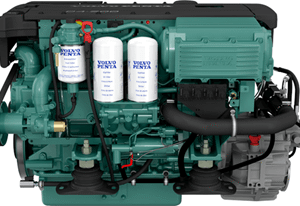
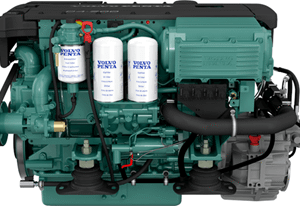
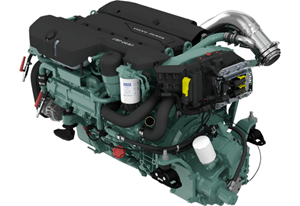
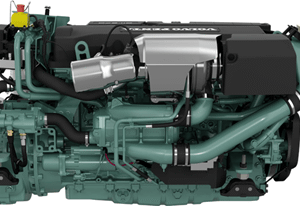
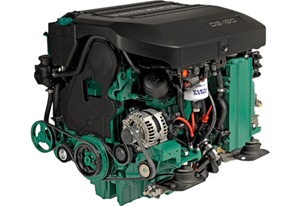
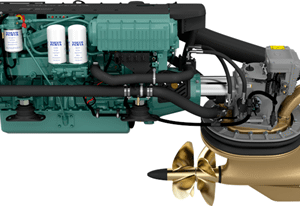
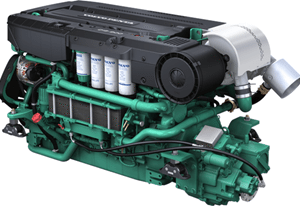
Volvo Penta D8-550 Marine Diesel Engine
The Volvo Penta D8-550 Marine Diesel Engine is a high-output, inline six-cylinder propulsion engine delivering 405 kW (550 HP) at 2,900 rpm. Built around a 7.7-litre diesel platform, the D8-550 combines common-rail fuel injection, advanced air management and Volvo Penta Electronic Vessel Control (EVC) in an integrated marine propulsion package.
Designed for compatible powerboats, motor yachts and other demanding marine applications, the D8-550 provides substantial propulsion output while maintaining the installation advantages of an inline six-cylinder engine.
Overview
The Volvo Penta D8-550 sits within the manufacturer’s D8 marine diesel engine family and is designed for applications requiring considerably more propulsion output than smaller D4 and D6 platforms.
At its core is a 7.7-litre inline six-cylinder diesel engine producing 550 HP (405 kW) at 2,900 rpm.
The engine combines electronically controlled common-rail fuel injection with an advanced charging system and Volvo Penta’s EVC electronic control architecture.
For vessel owners and boatbuilders, this combination provides a modern propulsion platform where the engine, controls and compatible vessel systems can operate as an integrated package.
Its 550 HP output makes the D8-550 particularly relevant to larger and higher-performance vessels where substantial propulsion power is required from each engine.
Applications and Compatibility
The Volvo Penta D8-550 marine engine can be considered for compatible powerboats, motor yachts and other marine applications requiring propulsion in the 550 HP class.
Depending on vessel design and propulsion requirements, the engine can form part of a single- or multi-engine installation.
For a new vessel, engine selection should take into account hull characteristics, vessel displacement, expected cruising conditions, propulsion arrangement and required performance.
For a repower, additional considerations become important.
The existing transmission, reduction ratio, shaft arrangement, propeller, engine mounts, available engine-room dimensions, exhaust, cooling and electrical systems should all be evaluated before confirming compatibility.
A 550 HP engine from another manufacturer should not automatically be considered directly interchangeable with the D8-550 simply because the power ratings are similar.
Engine Design and Performance
The D8-550 is built around an inline six-cylinder configuration with 7.7 litres of displacement.
Maximum rated output is 405 kW (550 HP) at 2,900 rpm, providing substantial power for compatible marine propulsion installations.
The inline-six arrangement provides a relatively straightforward engine layout while delivering the displacement and output required for larger vessels.
Air management is provided through the engine’s turbocharging system, working with the overall fuel and engine-management architecture to support the required output across its operating range.
The engine’s performance characteristics should always be evaluated together with the vessel and driveline.
Propeller selection, reduction ratio, hull condition, vessel loading and operating environment can all affect the performance achieved after installation.
Common-Rail Fuel System
The Volvo Penta D8-550 uses a common-rail fuel injection system.
Common-rail technology maintains fuel at high pressure independently of individual injection events, allowing the engine-management system to control injection according to operating requirements.
For buyers comparing the D8-550 with older mechanically injected engines, this represents an important technological difference.
The fuel system works together with the engine’s electronic controls and air-management system as part of the complete propulsion architecture.
For repower projects, the electronic nature of the engine should also be considered when planning instrumentation, wiring, controls and other vessel interfaces.
Electronic Vessel Control
The D8-550 incorporates Volvo Penta Electronic Vessel Control (EVC).
EVC provides an electronic architecture for integrating compatible propulsion controls, engine information and other vessel functions.
This is particularly important when selecting a modern marine engine because the propulsion package extends beyond the mechanical engine itself.
For a new installation, the EVC system should be considered during the planning of helm controls, instrumentation and associated electrical systems.
For a repower, owners moving from an older mechanically controlled engine may need to account for changes to controls, wiring and instrumentation.
The complete propulsion package should therefore be planned before installation begins.
Cooling System
The D8-550 uses freshwater cooling with a heat exchanger.
The closed freshwater circuit circulates coolant through the engine, while the heat exchanger transfers engine heat to the marine raw-water circuit.
This arrangement keeps the engine’s internal cooling passages separated from continuous direct exposure to seawater.
Correct cooling-system installation is particularly important on a high-output marine diesel engine.
Raw-water intake capacity, hoses, heat exchanger condition, exhaust arrangement and engine-room ventilation should all be appropriate for the installation.
For a repower project, the existing cooling and exhaust systems should therefore be assessed rather than automatically reused.
Installation Considerations
The D8-550 is a substantially larger propulsion engine than compact marine diesels used in smaller recreational craft.
The supplied specification indicates an approximate dry weight of 850 kg, making weight distribution and structural support important considerations during installation.
Engine weight should not be evaluated independently of the transmission and associated propulsion equipment.
The total installed propulsion package will weigh more once the gearbox, fluids, exhaust components, controls and other installation equipment are included.
For repowering, available engine-room space should be measured carefully.
Access for servicing should also be considered because an engine that physically fits within the machinery space may still be unsuitable if routine maintenance points cannot be reached.
Emissions and Marine Compliance
The supplied specification identifies the D8-550 with IMO NOx Tier II, EU RCD Stage II and EPA Tier 3 emissions compliance.
Regulatory requirements can differ according to the engine version, model year, vessel type and market.
For that reason, buyers who require a particular emissions certification should confirm the documentation supplied with the exact D8-550 engine being purchased.
This is especially important when an engine will be installed in a vessel operating under specific national or international regulatory requirements.
Who Is This Engine Suitable For?
The Volvo Penta D8-550 is particularly relevant to buyers requiring a 550 HP inline-six marine diesel engine for a compatible powerboat or motor yacht.
Potential buyers include private vessel owners, boatbuilders, marine engineers, shipyards, workshops and repower specialists.
Its 7.7-litre displacement and 550 HP output position it above smaller recreational marine engines, making it more appropriate for vessels with substantial propulsion requirements.
For repowering, buyers should assess the D8-550 against the complete existing propulsion system.
Transmission compatibility, reduction ratio, shaft size, propeller requirements, engine mounts, cooling capacity, exhaust system, electrical integration and engine-room space should all be confirmed before purchase.
Technical Specifications
The main specifications of the Volvo Penta D8-550 Marine Diesel Engine are summarized below for quick reference.
| Specification | Details |
|---|---|
| Manufacturer | Volvo Penta |
| Model | D8-550 |
| Product Type | Marine diesel propulsion engine |
| Rated Power | 405 kW (550 HP) |
| Rated Engine Speed | 2,900 rpm |
| Engine Configuration | Inline 6-cylinder |
| Displacement | 7.7 L |
| Aspiration | Turbocharged / Supercharged |
| Fuel System | Common-rail fuel injection |
| Control System | Volvo Penta Electronic Vessel Control (EVC) |
| Cooling System | Freshwater cooling with heat exchanger |
| Approx. Dry Weight | 850 kg |
| Emission Compliance* | IMO NOx Tier II / EU RCD Stage II / EPA Tier 3 |
| Primary Application | Marine propulsion |
Emissions certification should be confirmed against the exact engine version and documentation supplied with the unit.
Ordering and Support
Before ordering the Volvo Penta D8-550 Marine Diesel Engine, buyers should confirm the exact engine and propulsion configuration required for their vessel.
For a new installation, important considerations include transmission selection, reduction ratio, propeller requirements, controls, instrumentation, cooling and exhaust.
For a repower project, providing details of the existing engine model, gearbox, reduction ratio, shaft, propeller and engine-room dimensions can help establish whether the D8-550 is appropriate and what modifications may be required.
Buyers should also confirm exactly which components are included with the engine package being offered rather than assuming the transmission, controls or installation equipment are standard.
Customers comparing alternative outputs can explore our Volvo Penta marine engines, related diesel engines and other marine propulsion equipment.
For current availability and exact configuration information, contact JB Marine GmbH with your vessel and propulsion requirements.
Frequently Asked Questions
How much power does the Volvo Penta D8-550 produce?
The Volvo Penta D8-550 is rated at 405 kW (550 HP) at 2,900 rpm. Its 7.7-litre inline six-cylinder configuration places it within Volvo Penta’s higher-output marine diesel range for compatible powerboat and motor-yacht applications.
What is the displacement of the Volvo Penta D8-550?
The D8-550 has a displacement of 7.7 litres and uses an inline six-cylinder configuration. This provides the engine capacity required to produce substantial marine propulsion output while retaining a conventional inline engine layout.
Does the Volvo Penta D8-550 use common-rail injection?
Yes. The D8-550 uses a common-rail fuel injection system managed as part of its electronic engine architecture. This distinguishes it from older marine diesel engines that rely on conventional mechanical injection systems.
What is EVC on the Volvo Penta D8-550?
Electronic Vessel Control (EVC) is Volvo Penta’s electronic architecture for integrating compatible engine controls, propulsion functions and instrumentation. EVC requirements should be considered when planning either a new installation or the replacement of an older mechanically controlled engine.
How is the Volvo Penta D8-550 cooled?
The engine uses freshwater cooling with a heat exchanger. Engine coolant circulates through a closed circuit, while the marine raw-water side of the system removes heat through the heat exchanger.
How much does the Volvo Penta D8-550 weigh?
The supplied specification indicates an approximate dry weight of 850 kg. The complete installed propulsion package will weigh more after adding the transmission, fluids and associated equipment, so total installation weight should be considered during vessel planning.
Can the Volvo Penta D8-550 be used for a repower?
The D8-550 can be considered for a compatible marine repower project. Suitability depends on much more than its 550 HP output, including transmission and reduction ratio, shaft and propeller requirements, engine mounts, cooling, exhaust, electronics and available engine-room space.